
UoN Joins Global Partners to Advance Locally Led Education in Emergencies
The University of Nairobi joined international government representatives, humanitarian organizations, and development partners for a three-day forum aimed at transforming Education in Emergencies (EiE) through shared leadership, local ownership, and equitable decision-making.
Held in Nairobi from 13 to 15 October 2026 under the theme “Working Better Together: Shifting Power, Transforming Systems,” the forum was convened by the Inter-agency Network for Education in Emergencies (INEE), the Ministry of Education, State Department for Basic Education, and the University of Nairobi. The forum provided a platform for participants from different countries and organizations to examine the power dynamics shaping education responses during crises and identify practical ways to strengthen local leadership, resource allocation and community participation.
Opening the forum, INEE Director Dr. Faiza A. Hassan called for greater solidarity and collective responsibility in addressing the challenges facing children worldwide, particularly amid conflicts and the overlapping impacts of climate change. Drawing on the spirit of Harambee, she emphasized that sustainable solutions require stakeholders to recognize their respective strengths and work together as equals. She observed that transforming education systems requires moving beyond inherited practices and strengthening domestic financing, noting that aid alone cannot sustain education systems.
“It is time to move towards a model of true solidarity, one built on shared responsibility, collective action and a commitment to transforming the systems that shape our children's futures,” she said.
Representing the Vice-Chancellor, Prof. Rosemary Imonje highlighted the University’s contribution to EiE through academic training, research and partnerships. She traced UoN’s engagement in the field to 2010, when a donor-supported initiative spearheaded by Prof. Loice Gichuhi laid the foundation for a programme that was institutionalized the following year. The University now offers Education in Emergencies at Master's level, integrating academic learning with practical field experience. Its work has also extended beyond Kenya, including training education officers in Somalia between 2014 and 2016. Prof. Imonje underscored the importance of extending this expertise to the community level by equipping education managers, school principals and grassroots actors with the skills to respond to emergencies. She called for collective action and shared learning to strengthen education systems and advance Education in Emergencies globally.
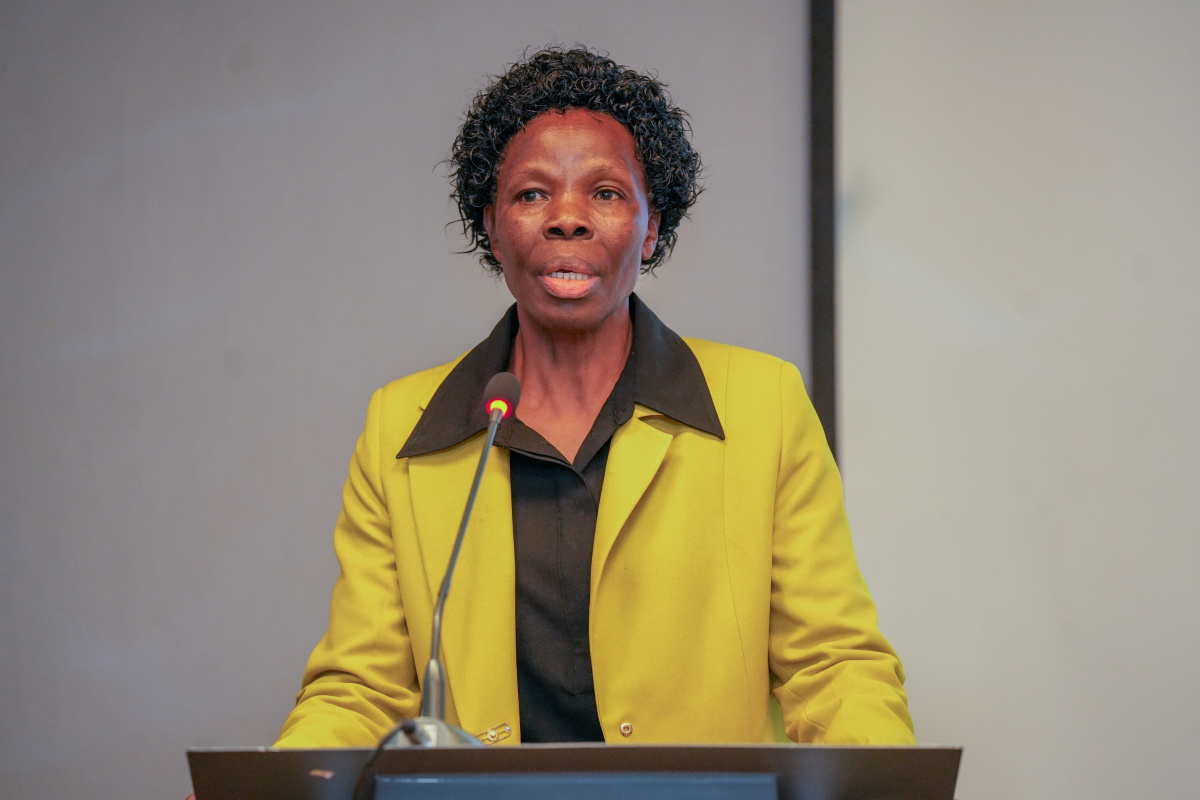
Speaking on behalf of the Ministry of Education, Mr. Nelson Sifuna, Education Secretary in the State Department for Basic Education, reaffirmed Kenya’s commitment to protecting children's right to education during crises. He noted that conflict and displacement continue to disrupt learning for millions of children, particularly refugees and internally displaced persons (IDPs). He emphasized that emergency responses must ensure access to safe, inclusive learning environments while strengthening systems to restore stability. Mr. Sifuna called for a shift in how decisions are made, resources allocated and solutions developed. He stressed that communities affected by crises must have a meaningful voice in decisions that affect them, while localization must be reflected in programme design, financing, implementation and evaluation. He further highlighted the need for sustainable financing, stronger teacher support, the inclusion of refugee and IDP learners, and the integration of climate resilience into education systems.
Beyond plenary discussions, participants engaged in visioning and power-mapping group exercises to examine what an ideal EiE sector would look like and what changes would be required to achieve it. Participants identified key actors, relationships and sources of influence within their respective contexts. They explored how power could be redistributed, who might resist change and how collective action could overcome barriers to locally led approaches. The discussions also examined the incentives and accountability structures influencing education responses at global, regional and national levels. Participants identified potential levers for change and considered how leadership, financing and decision-making could better reflect local priorities and experiences.
The final day focused on unresolved questions, concrete commitments and the way forward for advancing power shifting and localization in the sector.
Closing the forum, Dr. Elyas Abdi Jilaow, Director General in charge of Basic Education at the Ministry of Education, thanked the delegates and INEE for convening the gathering in Africa for the.. He acknowledged the University of Nairobi’s role in providing a platform for dialogue, knowledge sharing and collaboration. Drawing on Kenya’s experience in responding to emergencies, Dr. Jilaow reiterated the importance of ensuring that crises do not interrupt learning. He challenged stakeholders to reflect on whose voices inform decisions and called for stronger local leadership and closer examination of the institutions and practices that shape education responses.
The forum reinforced the need to place affected communities at the centre of Education in Emergencies, strengthen local capacity and ensure that resources and decision-making support sustainable solutions. Through its academic programmes, partnerships and participation in international dialogue, the University of Nairobi continues to contribute to efforts to strengthen education systems and protect every learner’s right to education, even in times of crisis.
